Yue Qian钱岳

Public Engagement

I bring sociological research into public conversations to deepen understanding of family, gender, and social justice. As a gender scholar and feminist, I am particularly passionate about using research to empower women and advance gender equality around the world.

Cover of 进入学术圈

进入学术圈

A personal guide to navigating a PhD and academic life.

在这本书里,我分享读博和在学术界升级打怪的经历与小妙招,希望为想读博、在读博以及身在学术界的朋友带来启发。
Ranked No. 1 on Dangdang’s new-book bestseller list in Social Sciences, December 2025.

媒体报道: 科学网 ↗ · 留学杂志公众号 ↗ · 留学杂志 ↗

读者书评: 百味鸡 OB Pluto ↗ · 生信菜鸟团 ↗ · 丁问渔 ↗ · 社会学研思 ↗

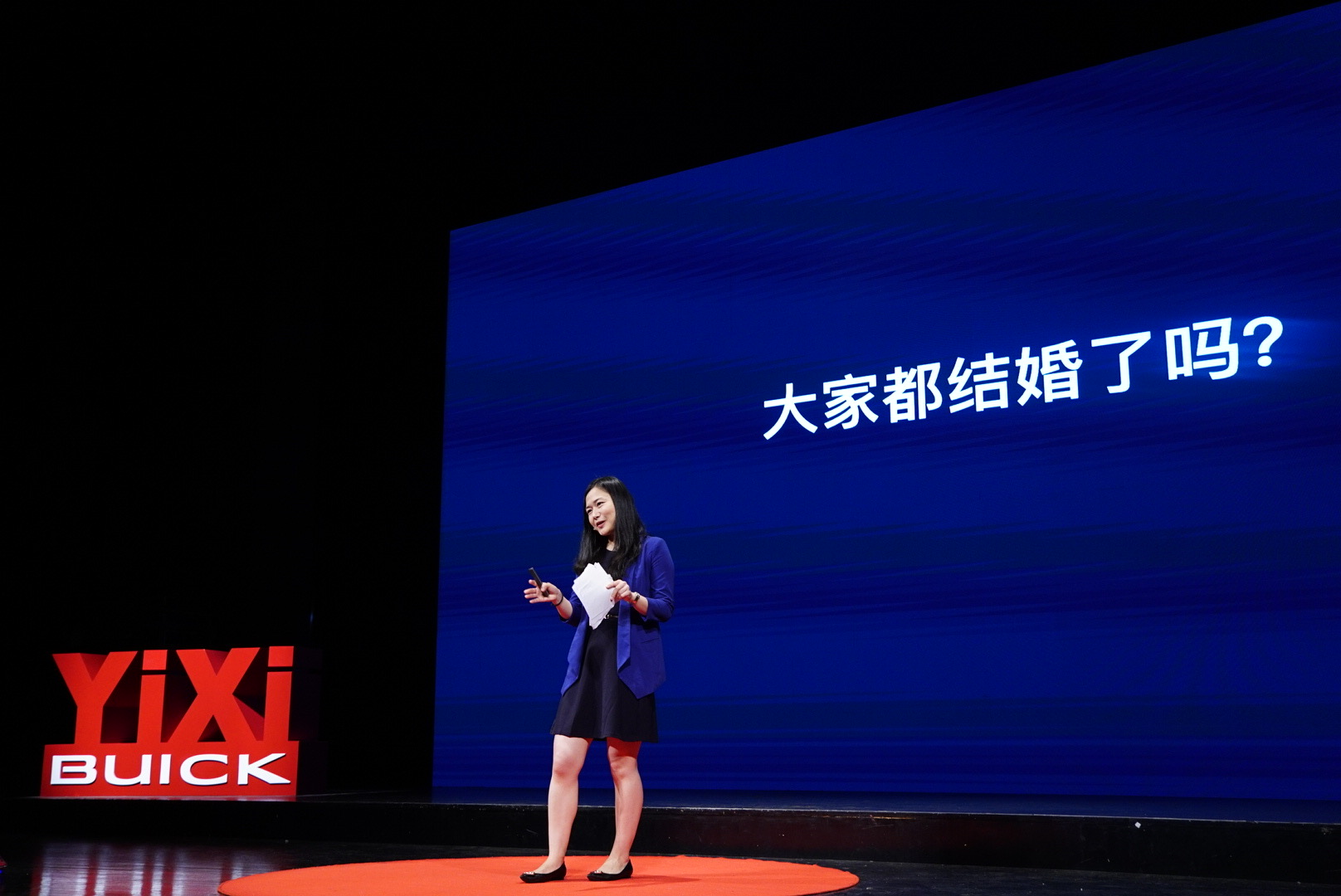
Yue Qian speaking on the Yixi stage
Yixi talk, 2018

Public Engagement Award (2023)

UBC Public Humanities Hub

Recognized for bringing research on gender and racial inequality to audiences ranging from young people to policymakers.

Read the award announcement ↗

Highlights: Impact beyond academia

Public engagement archive

Explore writing, interviews, public talks, and research explainers.

Public lectures
Op-eds
Ms-Muses (缪斯夫人)

I am a founding editor and contributor to Ms-Muses (缪斯夫人), a WeChat public account featuring research-based commentary on gender and family. I write and edit articles that bring sociological research into public conversations.

Research briefs
University news
Television & radio
  • January 22, 2025 How sexuality conflicts are quietly breaking relationships apart, Mornings With Mani (Sher-E-Punjab AM 600 Radio)
  • October 1, 2024 British Columbia's declining birth rate, CKNW 980 in Vancouver
  • February 14, 2024 Online dating in Canada, CBC News Radio Syndication (Halifax - Mainstreet, Toronto - Here and Now, Whitehorse - Airplay, St. John's - On the Go, Winnipeg - Up to Speed, Montreal - Let's Go, Sudbury / Thunder Bay - Up North, Calgary - Homestretch, Quebec City - Breakaway, Saskatchewan - Afternoon Edition, London/Windsor - Afternoon Drive, Northwest Territories - Yellowknife,  Vancouver - On the Coast, Edmonton - Radio Active)
  • February 14, 2024 Online dating in Canada, Omni Television
  • February 13, 2024 Online dating in Canada,  CBC Vancouver (Vancouver / Lower Mainland - The Early Edition, Victoria / Vancouver Island - On the Island, Kamloops and area - Daybreak Kamloops, Kelowna / Southern Interior - Daybreak South, Prince George / Northern Interior - Daybreak North)
  • August 2, 2021 "Social needs of older adults can't be met by technology alone, says new COVID-19 research," CTV News 
  • February 13, 2021 "How gender and grades in high school affect leadership prospects," City News Winnipeg
  • February 8, 2021 How gender and grades in high school affected leadership prospects, CBC Syndicated Audio (Vancouver - On the Coast, Quebec City - Breakaway, Ottawa - All in a Day, Sudbury - Up North, Saskatchewan - Afternoon Edition, London/Windsor - Afternoon Drive, Edmonton - Radio Active)
  • February 4, 2021 "Challenges women face when it comes to advancing in the workplace," Global News
  • March 6, 2020 Mental health impact of quarantine, CBC News (Associate Producer: Max Collins)
  • March 6, 2020 Mental health impact of quarantine, City News
  • March 14, 2018 "A two child China," Janice and Cory on Roundhouse Radio 98.3
  • August 2, 2017 "What's behind the trend of one-person households?" CBC News
  • March 27, 2017 How birthplace and education influenced marriage choices in China, Kirk LaPointe on Roundhouse Radio 98.3
  • November 1, 2016 Why highly-educated women still married up in income, Kash Heed Show on Pluse FM
  • October 31, 2016 Why highly-educated women still married up in income, Kirk LaPointe on Roundhouse Radio 98.3
  • October 28, 2016 Why highly-educated women still married up in income, Global News Hour at 6
  • October 28, 2016 Why highly-educated women still married up in income, Breakfast Television Vancouver
Print & online interviews
Chinese-language articles
Research explainers in Chinese
Personal profiles & interviews
  • I was interviewed by the Institute for Population Research at the Ohio State University.
  •  I was interviewed by ELLe China, as an example of inspirational women in their early 30s, in their March 2018 Issue.
  • I was interviewed by People (人物), a Chinese monthly magazine of celebrity and human-interest stories, to talk about gender inequality in China. This interview has received about 250,000 views online since December 18, 2017. It was also reprinted by Sina News and the blog “MS-Muses” on May 23, 2018.
  • I was interviewed by the Department of Sociology at the Ohio State University to discuss my COVID-19-related research.
Student collaboration & knowledge sharing
Research in policy conversations

Research in charts

Explore findings on gender, family, work, and social change.
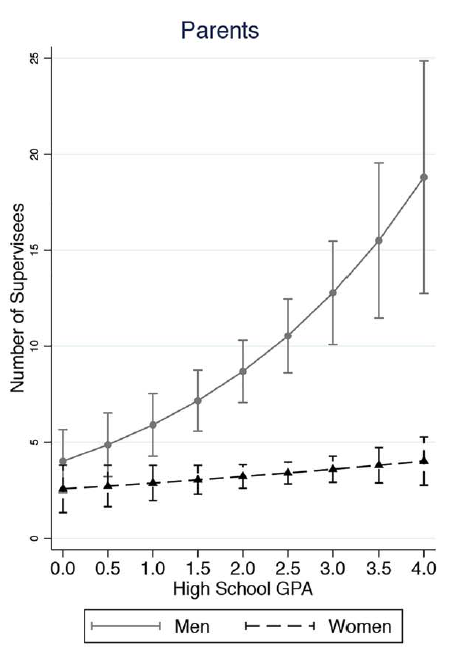
Leadership and the under-use of women’s talent
The gender leadership gaps by GPA are stark among parents who were top achievers in high school. Among those who earned a 4.0 GPA, fathers manage over four times the number of supervisees as mothers do (Figure 1). This research highlights the vast under-utilization of women’s talent for organizational leadership.
Figure 1: The predicted number of supervisees, by gender and high school GPA, for parents
Online dating and immigrant relationships
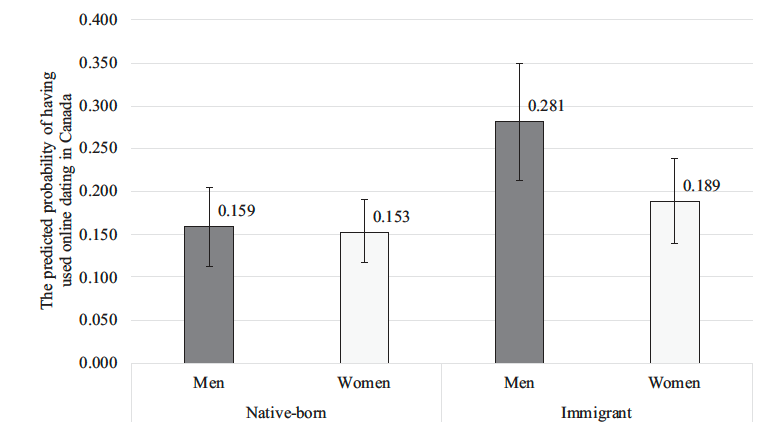
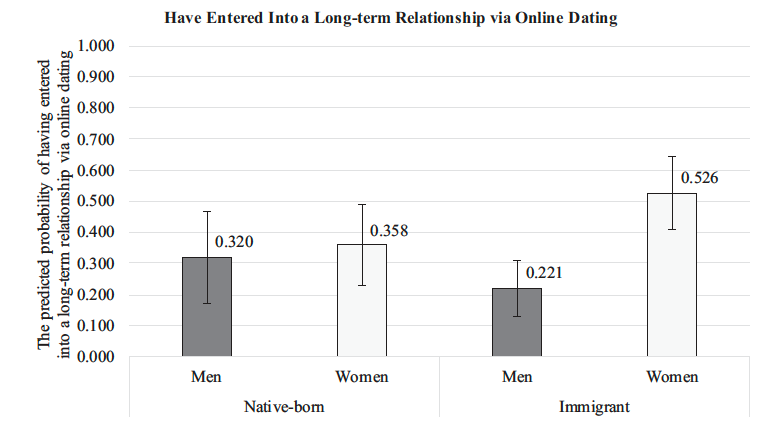
When talking about settlement and integration, we often focus on helping immigrants get a job, but what about their needs for love and companionship? My research shows that immigrant men appear most proactive in adopting online dating (Figure 2a), but they are the least likely to find a long-term partner via online dating (Figure 2b).
Figure 2a: The predicted probability of having used online dating in Canada, by gender and nativity status
Figure 2b: The predicted probability of having entered into a long-term relationship via online dating, by gender and nativity status
Gendered age preferences in online dating
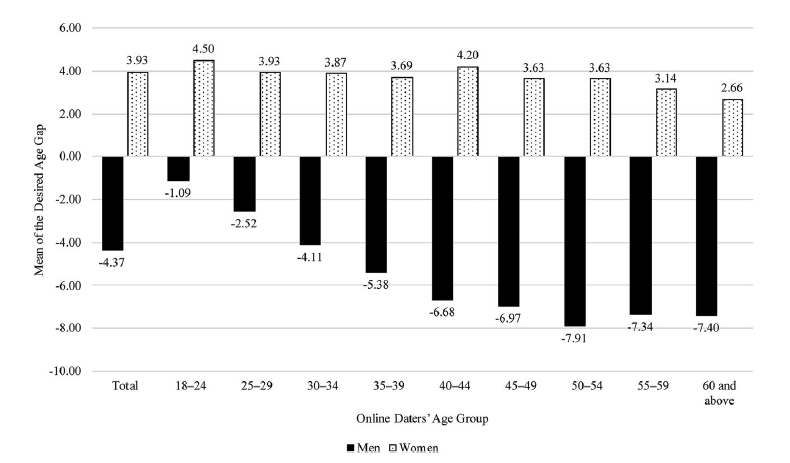
According to a study that analyzes online dating profiles, age preferences are highly gendered. With increases in age, men increasingly prefer partners who are much younger than themselves, whereas women do not show much variation in preferred age gaps between them and their partners (Figure 3).
Figure 3: Mean of the desired age gap, by online daters’ gender and age group
Child marriage in Mainland China
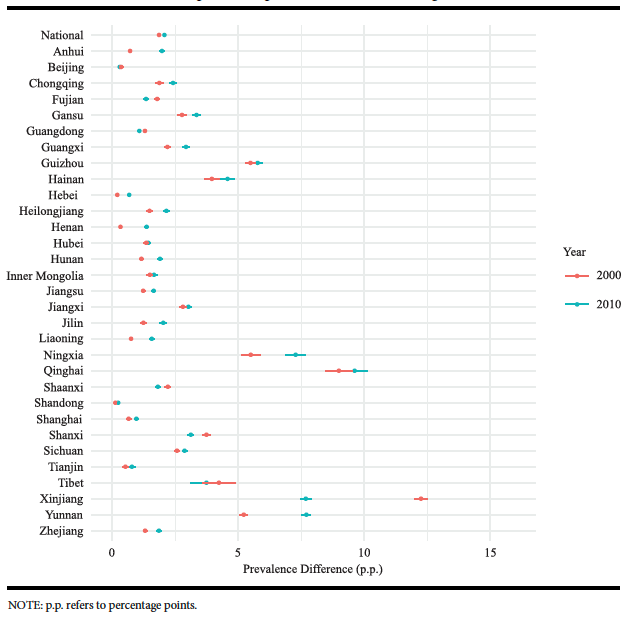
Child marriage, defined as marriage before 18 years of age, is an indicator of gender inequality. In Mainland China, child marriage is more prevalent among women than among men, and the gender gap is widening over time. According to a study that analyzes census data, the gender gap in the prevalence of child marriage in 2010 was greater than that in 2000 in at least 22 of the 31 provinces (Figure 4).
Figure 4: Sex difference in provincial prevalence of child marriage
College majors and partner selection
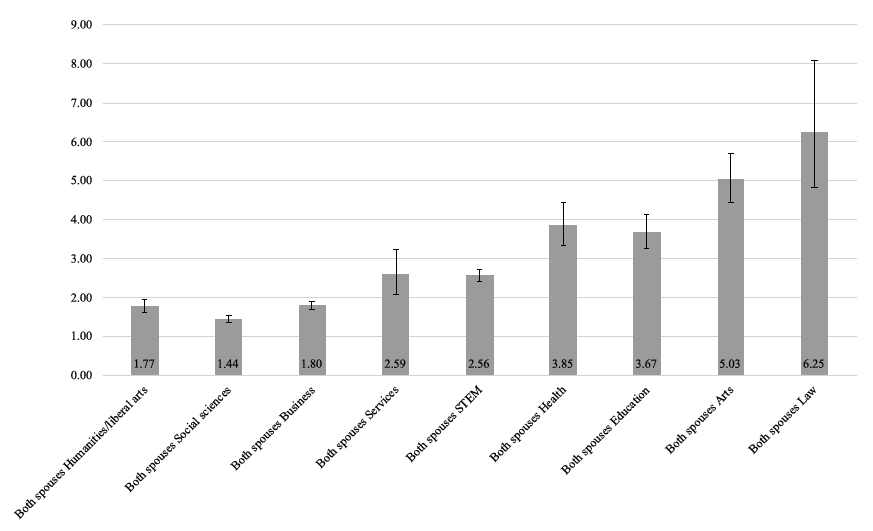
According to a study that analyzes American Community Survey, college major influences whom you marry. College graduates majoring in law, arts, health, and education are more likely to marry someone with the same major, whereas those in social sciences, humanities/liberal arts, and business are less likely to marry within their own major (Figure 5).
Figure 5: Odds of field-of-study homogamy, by field of study
Science beliefs and COVID-19
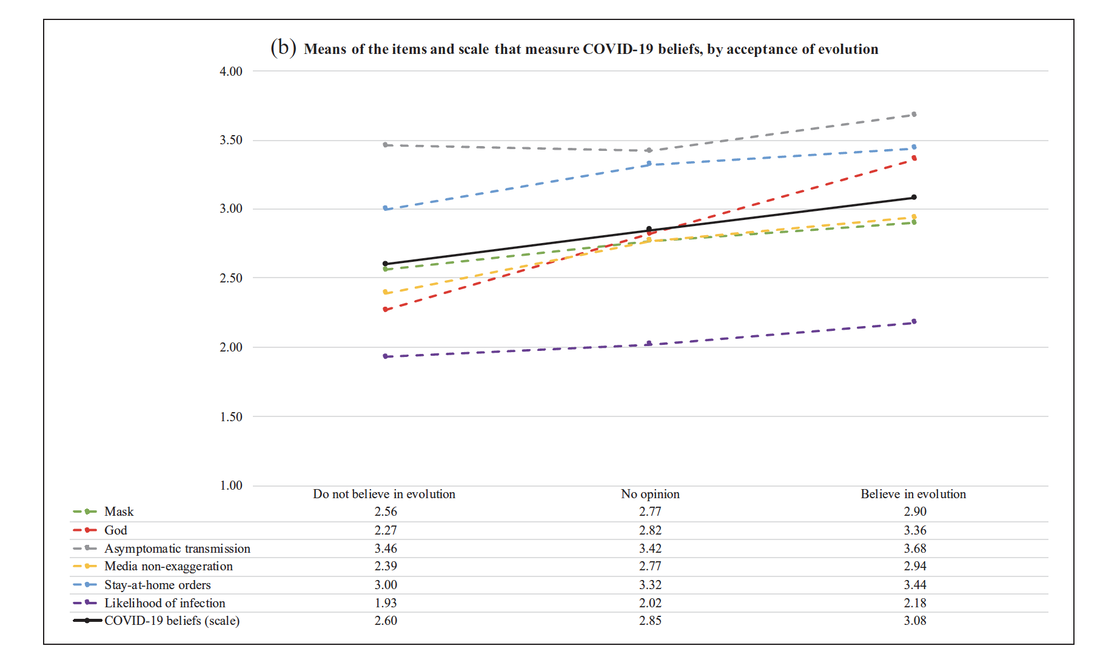
According to a study that analyzes nationally representative U.S. data, acceptance of evolution is associated with treating COVID-19 more seriously (Figure 6). Thus, how individuals think about science shapes their understanding of COVID-19.
Figure 6: Means of the items and scale that measure COVID-19 beliefs, by acceptance of evolution
Education and premarital pregnancy
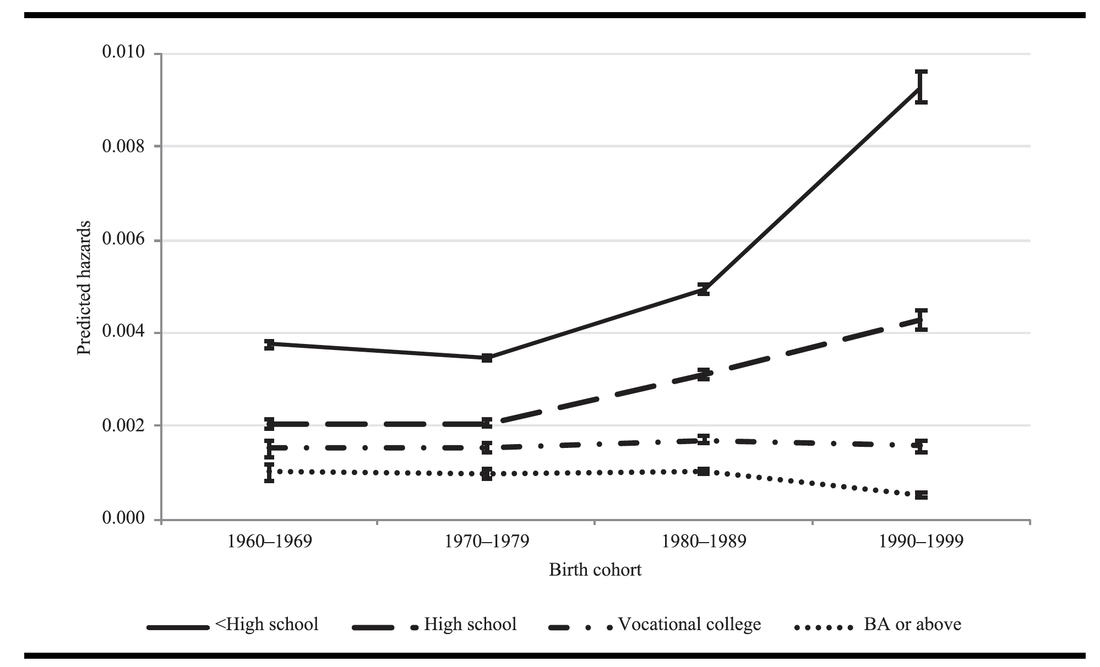
According to a study that analyzes a nationally representative sample of 221,990 Chinese women born between 1960 and 1999, those born in the 1980s and 1990s are more likely than those born in the 1960s and 1970s to experience a pregnancy prior to first marriage (Figure 7). This cohort trend is driven by increases in premarital pregnancy among women with a high school education or less. The less educated women and their college counterparts increasingly diverge in the likelihood of experiencing a premarital pregnancy.
Figure 7: Predicted hazards of experiencing a premarital pregnancy, by education and birth cohort
Work schedules and mothers’ child care
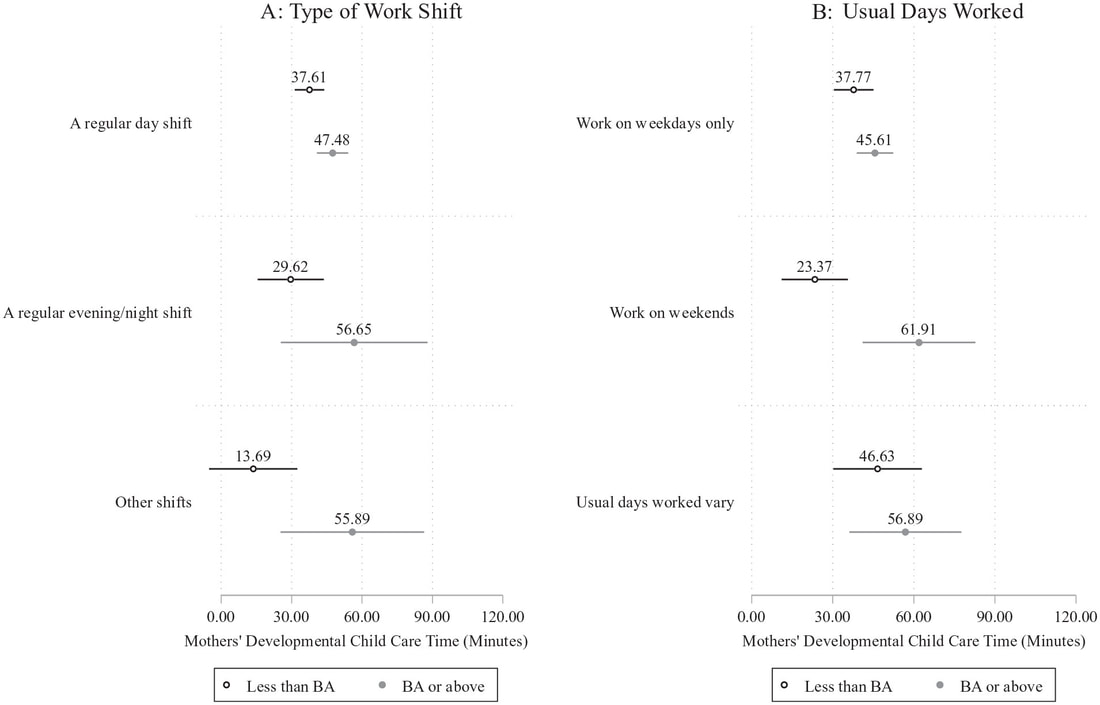
According to a study that analyzes the American Time Use Survey 2017–2018 Leave and Job Flexibilities Module, unstable and irregular scheduling arrangements, such as nonstandard shifts and weekend jobs, widen the educational gap in mothers' developmental child care time (Figure 8). 
Figure 8: Predicted developmental child care time (minutes/day) for mothers, by maternal education and type of work shift or usual days worked
Housework and marital satisfaction
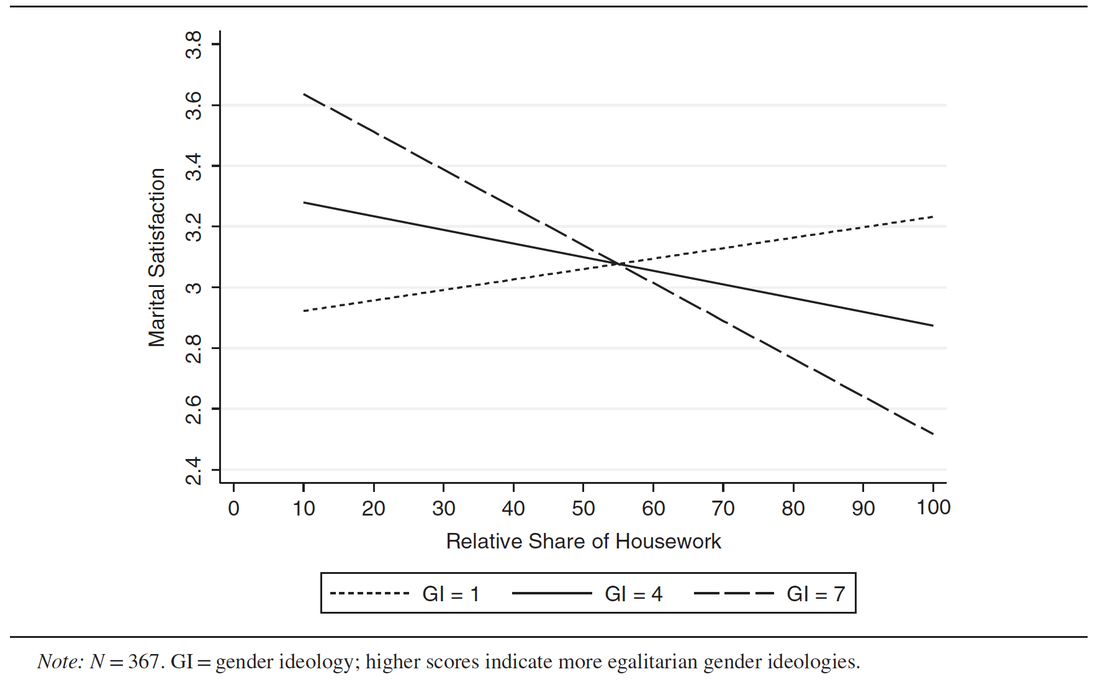
How does the gender division of housework shape Taiwanese women's marital satisfaction? It depends on these women's gender ideology. As shown in a study published in the Journal of Marriage and Family, for the least egalitarian Taiwanese women, relative share of housework was positively associated with marital satisfaction, whereas for the most egalitarian women, their relative share of housework was negatively associated with marital satisfaction (Figure 9).
Figure 9: Associations between Taiwanese women’s share of housework and marital satisfaction, by gender ideology
Mothers, fathers, and educational mobility
What implications of education expansion and changes in the educational pairing patterns of parents are there for intergenerational educational mobility? 

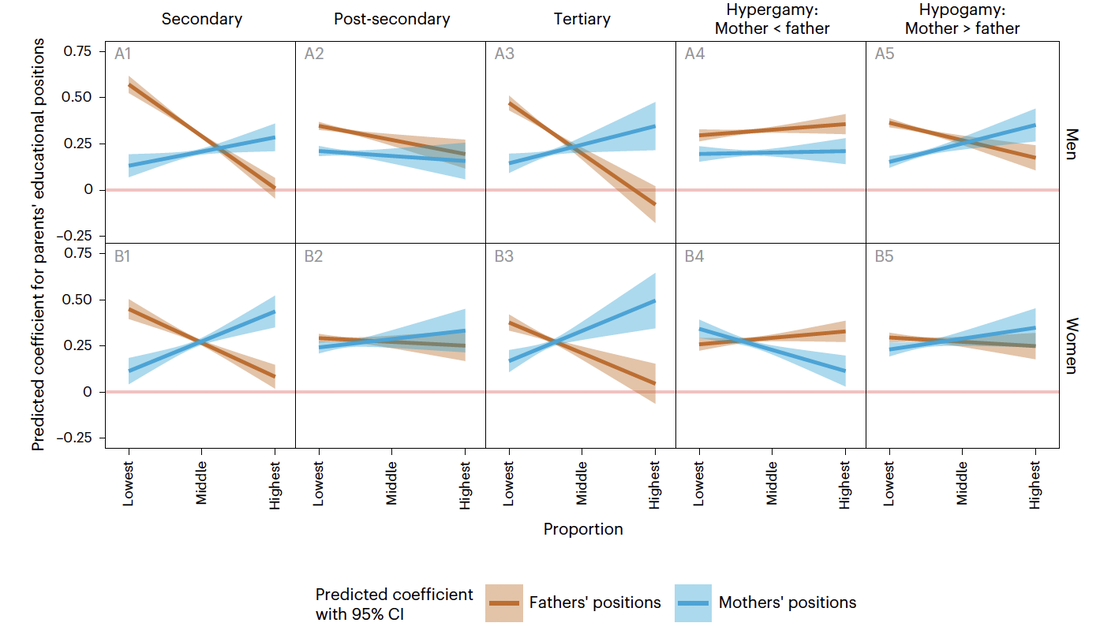
Bringing mothers into the picture, a study published in Nature Human Behaviour challenges the idea that increased access to education around the world has allowed more children to achieve educational success irrespective of their parents’ education. With education expansion, father–child associations in educational status have weakened, whereas mother–child associations have strengthened (Figure 10).

In addition, as the proportion of mothers paired with a less-educated father (hypogamy) in society and cohort increases, mother–child associations in educational status strengthen and father–child associations weaken. Conversely, as the proportion of mothers paired with a more-educated father (hypergamy) increases, mother–daughter associations in educational status weaken (Figure 10). The findings on the changing educational pairing patterns of parents underline the importance of considering the gendered context in which education expansion occurs.
Figure 10: Predicted parent–child associations in educational status vary with education expansion and
the educational pairing patterns of parents across societies and cohorts
Figure 10: Predicted parent–child associations in educational status vary with education expansion and the educational pairing patterns of parents across societies and cohorts
Parents’ re-employment during COVID-19
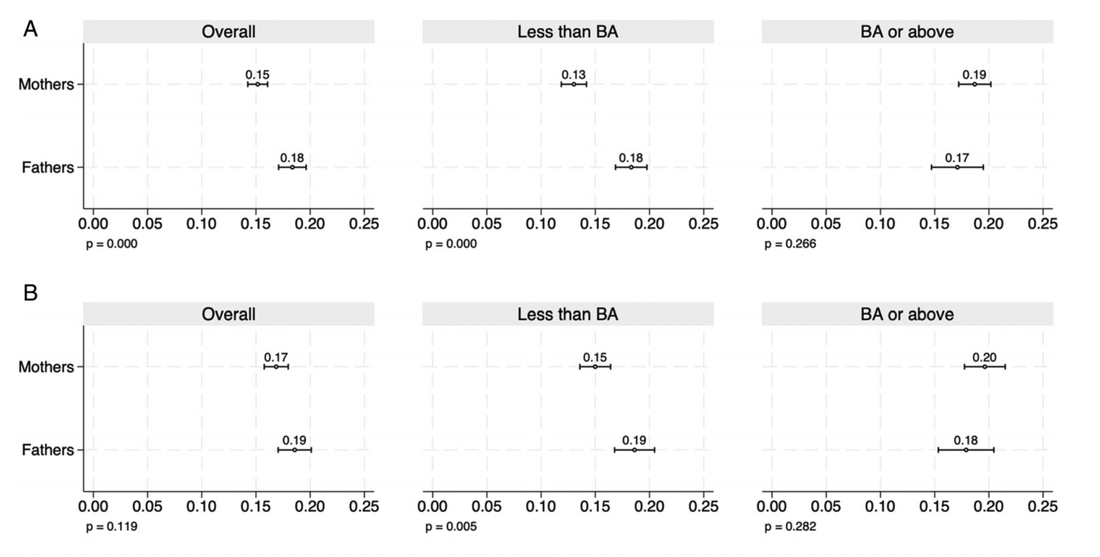
The pandemic recession has been dubbed a “shecession.” My research reveals intersectional inequalities in the consequences of job loss during the pandemic as experienced by mothers and fathers of different educational levels. After job loss during the pandemic, fathers of young children had an advantage in finding re-employment over mothers of young children, with this pattern concentrated in parents without a bachelor’s degree. The gender re-employment gap among less-educated parents persisted even after we accounted for a wide set of controls (Figure 11).
Figure 11: The predicted probability of re-employment. Error bars indicate 95% confidence intervals. The significance of the father–mother difference is indicated by the p-value on the bottom left of each subgraph. (A) Baseline models without controls. (B) Full models with all controls
Job insecurity and mental health
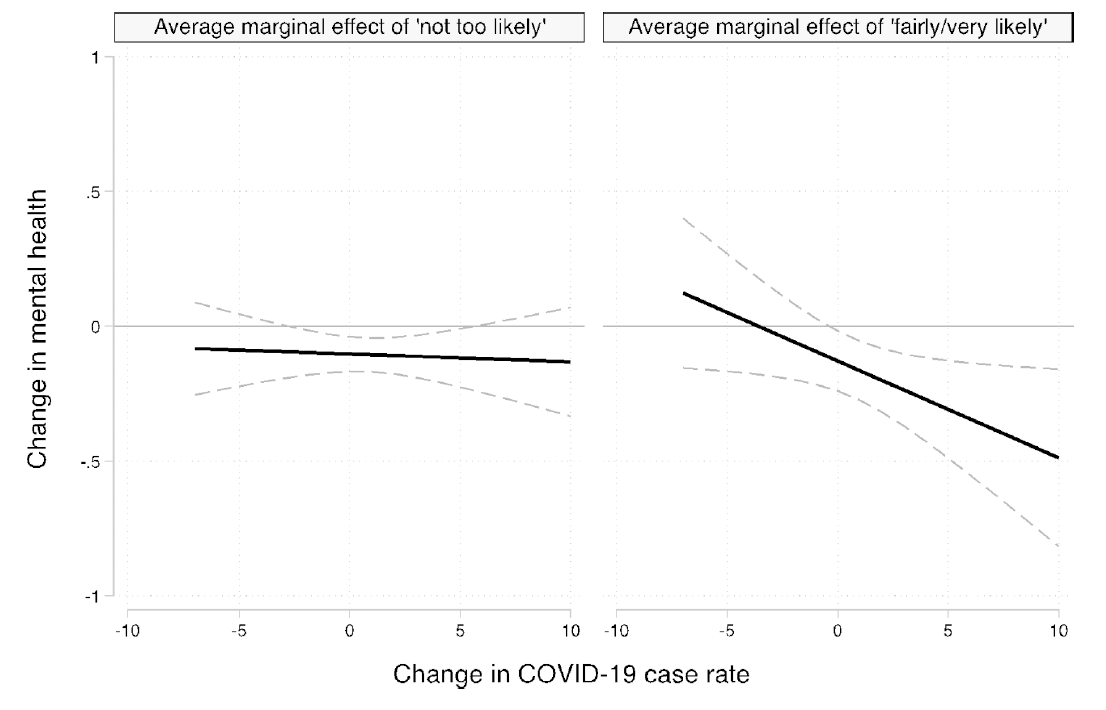
The widespread economic downturn during the COVID-19 pandemic led to challenges for still-employed workers as well, creating concerns and uncertainties about their jobs. My research shows that living in states with increased COVID-19 case rates exacerbates the adverse effects of perceived job insecurity on mental health (Figure 12).
Figure 12: Average marginal effects of change in job insecurity from “not at all likely” to “not too likely” (left panel) or to “fairly/very likely” (right panel) on change in mental health, by change in state-level COVID-19 case rate
Gendered stress during COVID-19
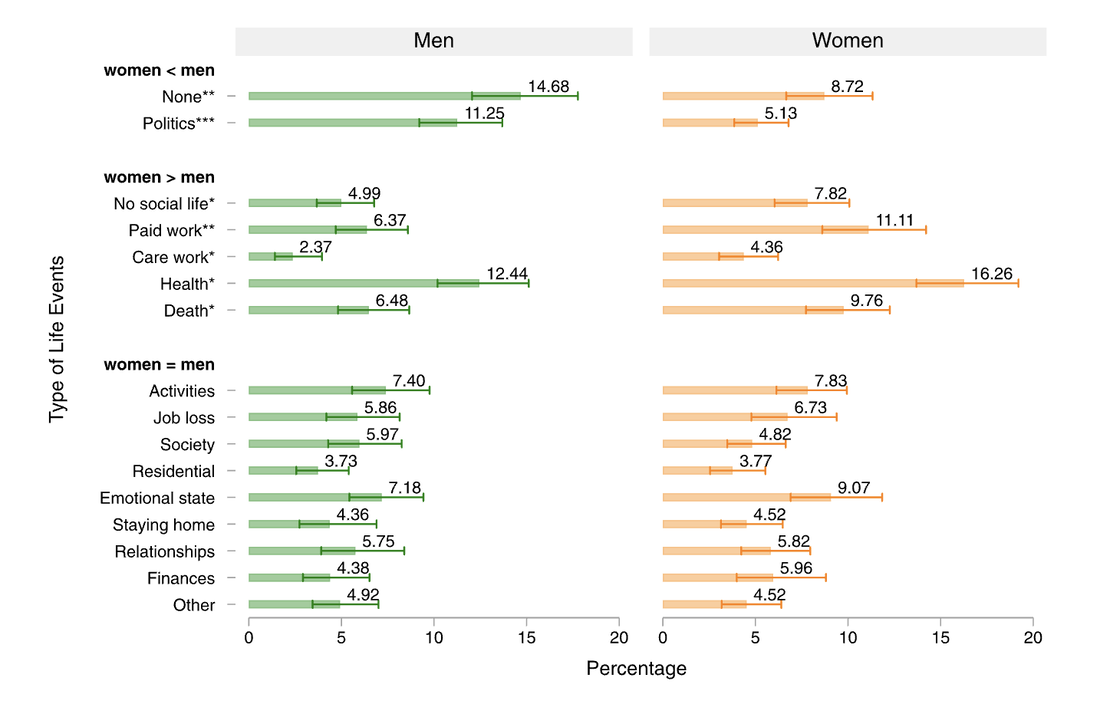
My research drew on individuals' own words to identify both conventional and novel sources of stress during COVID-19. Men were more likely to report having experienced no stressful life events or else mention politics as a source of stress. Women, by comparison, were more likely to report the following as stressful—inability to socialize, paid work, care work, health, or the death of loved ones (Figure 13). Importantly, gendered exposure to stressful life events contributed to women's greater depressive symptoms compared to men's.
Figure 13: Percentage reporting each type of stressful life events, by gender.
How couples meet in Canada
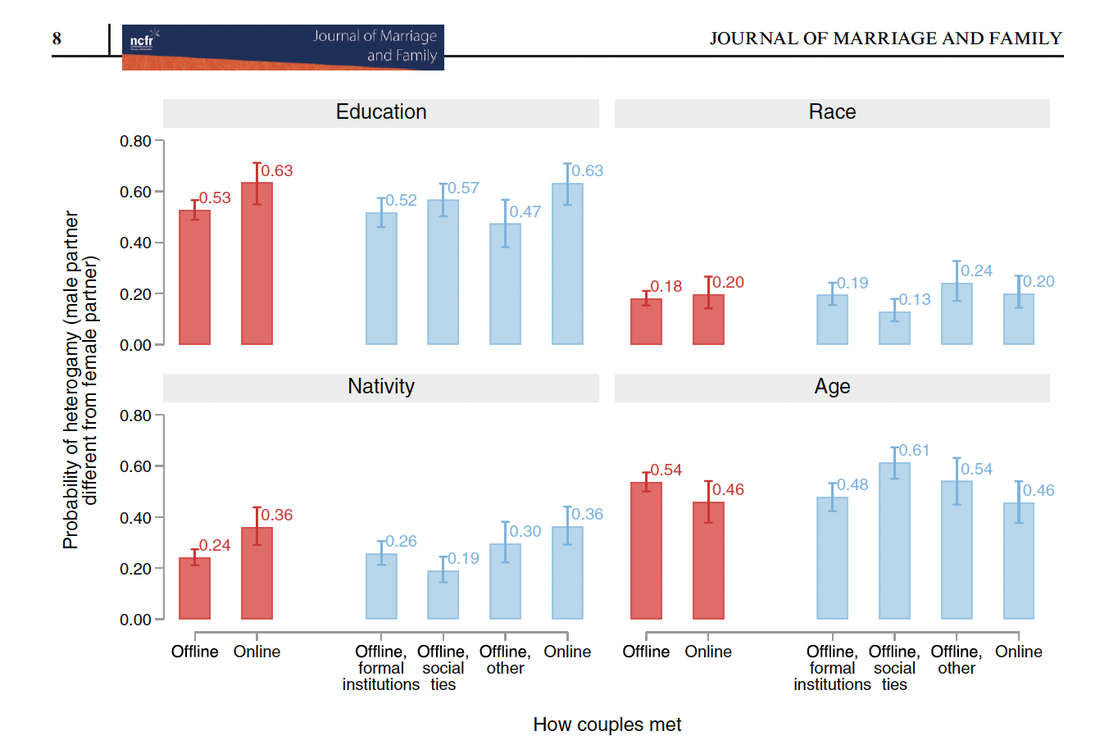
My research examines, for the first time in Canada, the relationship between how different-sex couples meet and assortative mating on education, race, nativity, and age. The red bars in Figure 14 indicate that educational heterogamy and nativity heterogamy are higher, but age heterogamy appears lower, in online than offline dating. As for the blue bars, specific channels of offline dating— formal institutions, social ties, and other channels— are distinguished and compared with online dating. Online dating tends to entail higher educational and nativity heterogamy (vs. meeting through formal institutions), higher racial and nativity heterogamy but lower age heterogamy (vs. meeting through social ties), and higher educational heterogamy (vs. meeting through other offline channels).
Figure 14: Predicted probability of heterogamy, by how couples met.
Changing gender attitudes in China
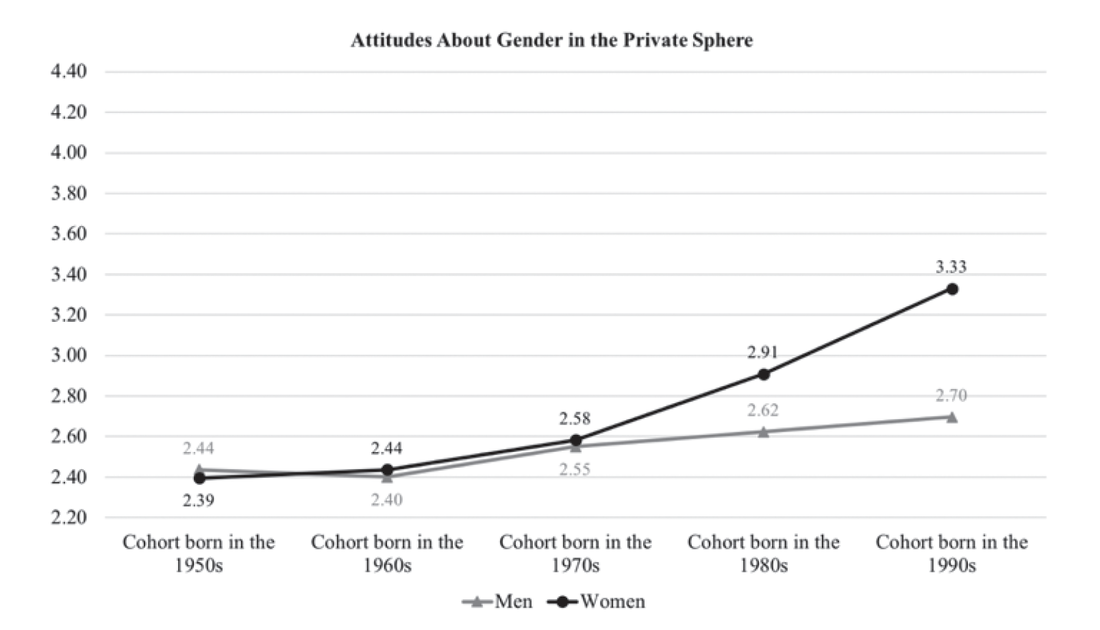
My research analyzes Chinese individuals' responses to the question: “Men should put career first, whereas women should put family first.” Responses range from 1 (completely agree) to 5 (completely disagree), with higher scores indicating more egalitarian gender ideology.  Figure 15 shows that women hold more egalitarian gender attitudes than men and the gap in gender attitudes between women and men has widened among younger cohorts.
Figure 15: Mean values of gender attitudes, by birth cohort and gender
Chinese attitudes toward the United States
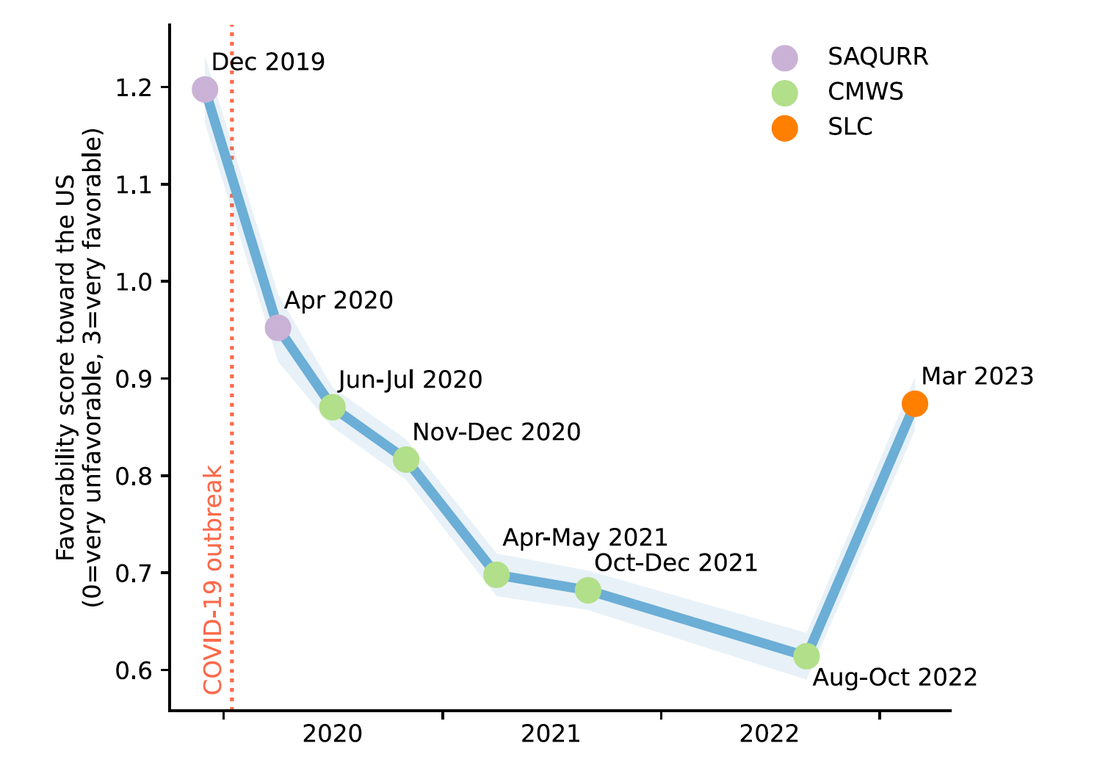
A study published in the PNAS compiles a series of social surveys conducted in China between 2019 and 2023 to track changes in attitudes toward the United States over time. Figure 16 shows a marked decline in Chinese attitudes toward the U.S. between late 2019 and the end of 2022.
Figure 16: Trends in Chinese favorability score toward the United States
Productivity changes and career rewards
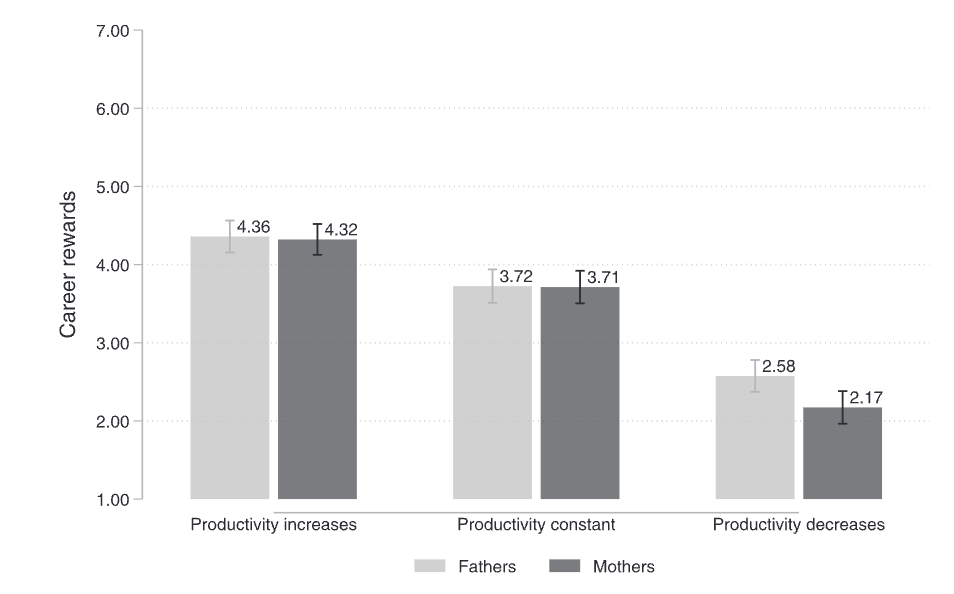
Using a novel survey experiment fielded among 975 U.S. managers, my co-authors and I assessed how a parent's productivity changes (because of childcare issues outside their control) influenced managers' recommendations of future organizational rewards (pay, promotions, etc.) to the parent. We found that managers assigned lower career rewards to workers whose productivity decreased, relative to workers whose productivity increased or stayed constant. Managers, however, more severely penalized mothers, compared to fathers, when their productivity decreased (Figure 17).
Figure 17: Predicted career rewards by workers' gender and productivity